
MANY YEARS OF EXPERIENCE
Digital images are all around us
The trustworthiness of photographs has an essential role in many areas, including: forensic investigation, criminal investigation, surveillance systems, intelligence services, medical imaging, and journalism. The art of making image fakery has a long history. But, in today’s digital age, it is possible to very easily change the information represented by an image without leaving any obvious traces of tampering. Despite this, no system yet exists which accomplishes effectively and accurately the image tampering detection task.
The digital information revolution and issues concerned with multimedia security have also generated several approaches to digital forensics and tampering detection. Generally, these approaches could be divided into active and passive–blind approaches. The area of active methods simply can be divided into the data hiding approach (e.g., watermarks) and the digital signature approach. We focus on blind methods, as they are regarded as a new direction and in contrast to active methods, they work in absence of any protecting techniques and without using any prior information about the image. To detect the traces of tampering, blind methods use the image function and the fact that forgeries can bring into the image specific detectable changes (e.g., statistical changes).
When digital watermarks or signatures are not available, the blind approach is the only way how to make the decision about the trustworthiness of the investigated image. Image forensics is a burgeoning research field and promise a significant improvement in forgery detection in the never–ending competition between image forgery creators and image forgery detectors.
Detecting traces of resampling
When two or more images are spliced together , to create high quality and consistent image forgeries, almost always geometric transformations such as scaling, rotation or skewing are needed.
The knowledge of whether the given image or some of its portions have been resampled can play an essential role in many fields, especially in image forensics. When two or more images are spliced together, to create high quality and consistent image forgeries, almost always geometric transformations such as scaling, rotation or skewing are needed. Geometric transfor
Detecting near–duplicated image regions
In a common type of digital image forgery, called copy–move forgery, a part of the image is copied and pasted into the another part of the same image, typically with the intention to hide an object or a region.
In this work we focused on detecting a common type of digital image forgery, called copy-move forgery. In copy-move forgery, a part of the image is copied and pasted into another part of the same image, with the intention to hide an object or a region of the image. Duplicated regions may not always match exactly. This could be caused by a lossy
Noise inconsistencies analysis
A commonly used tool to conceal traces of tampering is addition of locally random noise to the altered image regions. This operation may cause inconsistencies in the images noise.
A commonly used tool to conceal traces of tampering is the addition of locally random noise to the altered image regions. The noise degradation is the main cause of failure of many active or passive image forgery detection methods. Adding locally random noise may cause inconsistencies in the image’s noise. Therefore, the detection of various noise levels in an image may signi
Application of cyclostationarity analysis to image forensics
The term cyclostationarity refers to a special class of signals (cyslostationary signals) which exhibit periodicity in their statistics.
The term cyclostationarity refers to a special class of signals which exhibit periodicity in their statistics. In this work, we focused on geometrical transformations and showed that images that have undergone such transformations contain hidden cyclostationary features. This justifies employing the well–developed theory of cyclostationarity and its efficient methods for analyzing images' history in respect to geometr
OUR TOP HIGHLIGHTS FOR THIS FIELD
Tree Leaf Database MEW2019
This database called MEW (Middle European Woods) was originally with
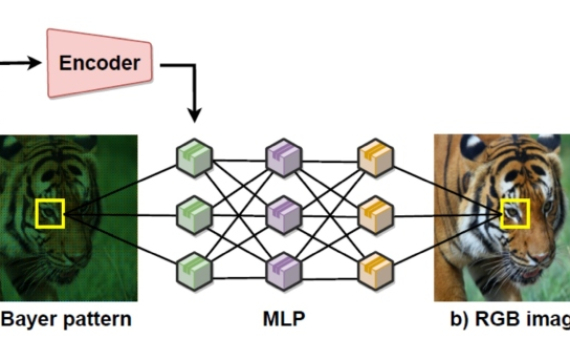
Advanced Neural Representations for Image Reconstruction
Images captured by sensors are often incomplete or degraded, and we need to reconstruct them into

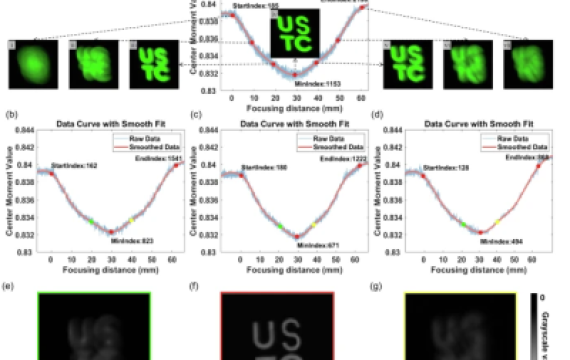
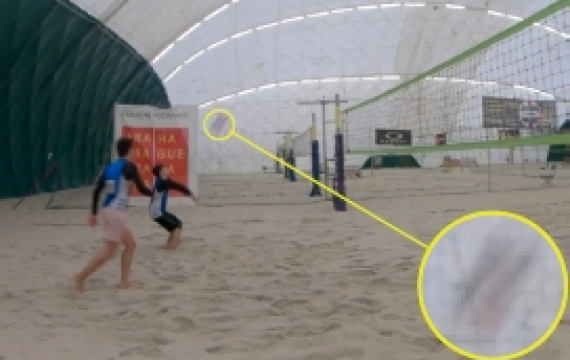
Deblatting (deblurring and matting) of fast moving objects
From the given input image containing the blurred object in front of a static background and a se
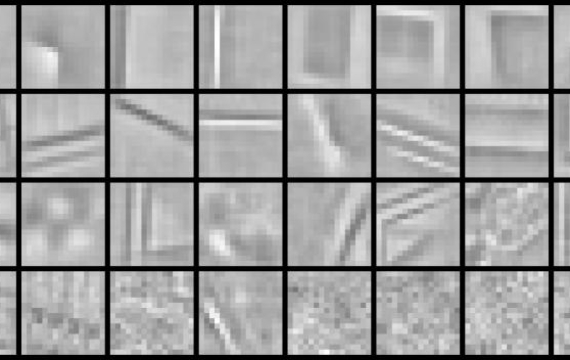
Fast convolutional sparse coding using matrix inversion lemma
This web page describes results published in our paper: Michal Šorel, Filip Šroubek, Fast convo
Super-resolution in Mobile Devices
Super-resolution is a mathematical algorithm that combines multiple low-resolution input images a
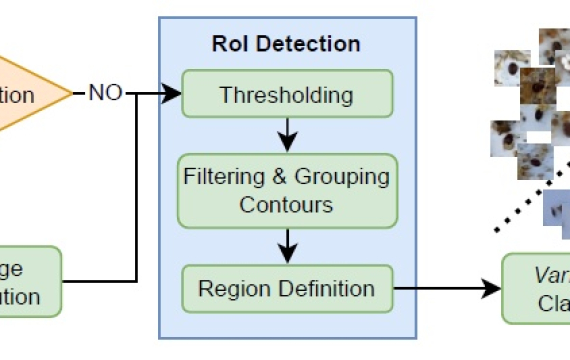
Monitoring of Varroa Infestation Rate in Beehives: A Simple AI Approach
2022 IEEE International Conference on Image Processing (ICIP), p. 33
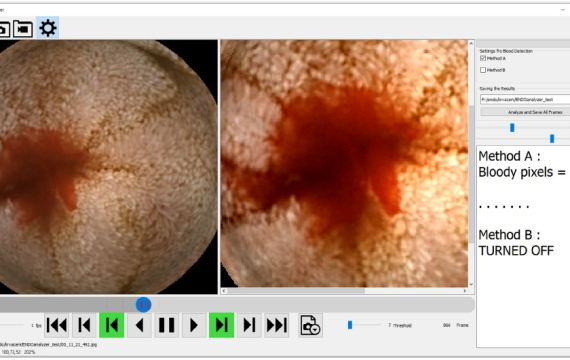
Automatic blood detection in capsule endoscopy video
Journal of Biomedical Optics vol.21, 12 (2016), p. 1-8
We propose two automatic methods f
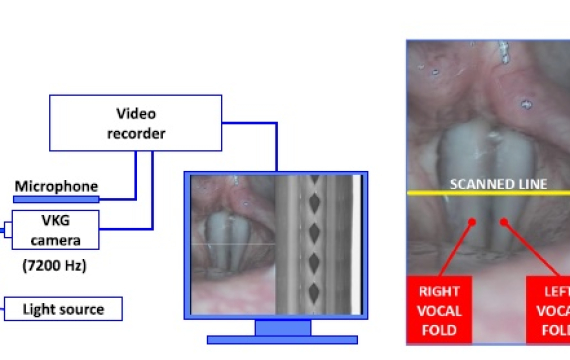
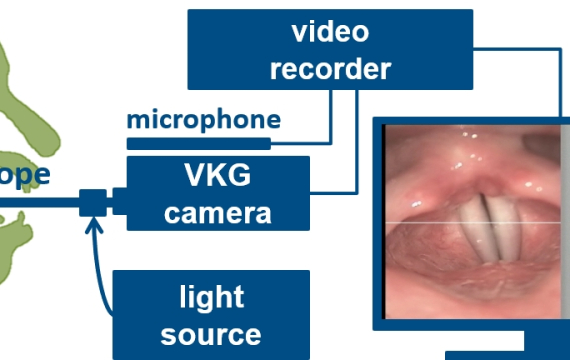
Videokymogram Analyzer Tool: Human–computer comparison
Biomedical Signal Processing and Control, vol.78, September (2022),
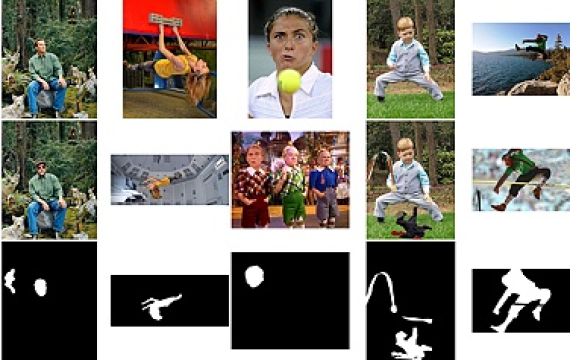
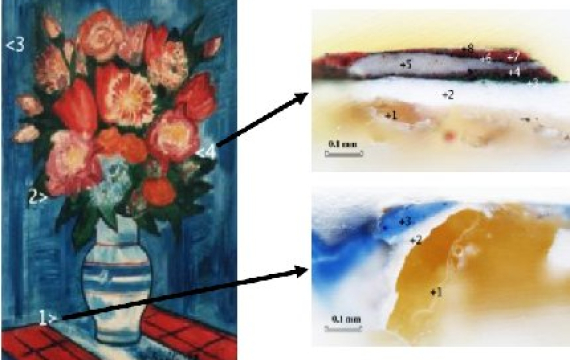
Microscopic samples from material research
Our work is aimed at the processing of image data, collected during material research. We concent
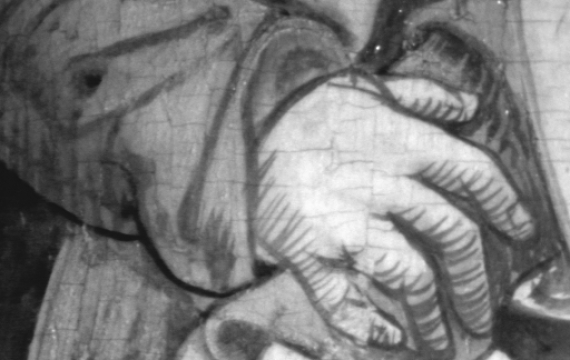
Denoising of underdrawing IR images by means of TPS
Infrared analysis has long been used in the fields of art history an
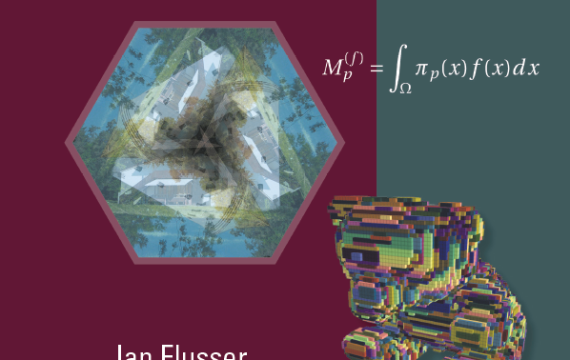
Book : 2D and 3D Image Analysis by Moments
Jan Flusser, Tomáš Suk, and Barbara Zitová, 2D and 3D Image Analysis by Moments, Wiley
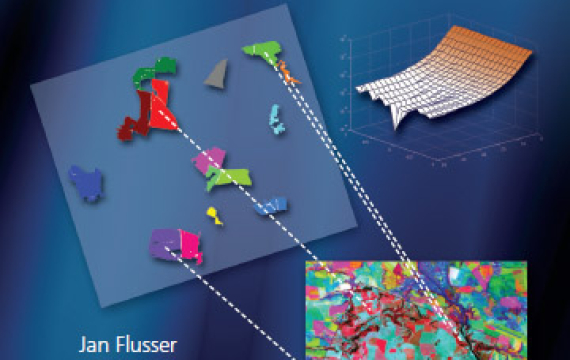
Book : Moments and Moment Invariants in Pattern Recognition
Jan Flusser, Tomáš Suk, and Barbara Zitová, Moments and Moment Invariants in Pattern R


PROVENANCE
PROviding VErificatioN AssistaNCE for New Content
Read More 3451
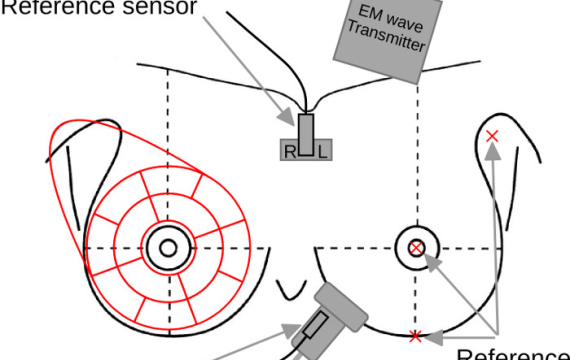
Software for Monitoring Coverage in Hand-Held Whole-Breast Ultrasound
Supported by (ID): TA04011392
Grantor: Technology Agency ČRRead More 1316
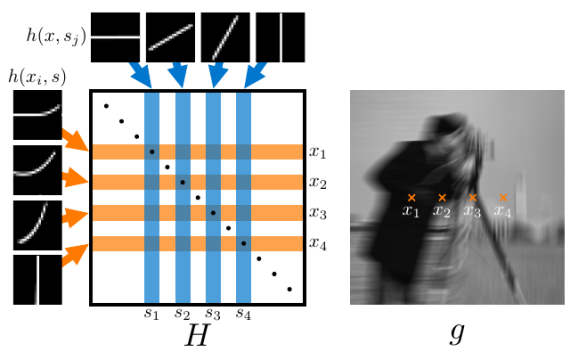
Decomposition of Space-Variant Blur in Image Deconvolution
Standard convolution as a model of radiometric degradation is in majority of cases inaccurate as
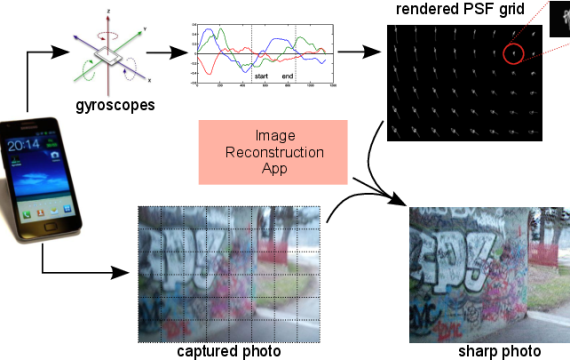
Blind Deconvolution in Smartphones
Smartphones are now widely used as photographic devices. Their cheap cameras are prone to many de
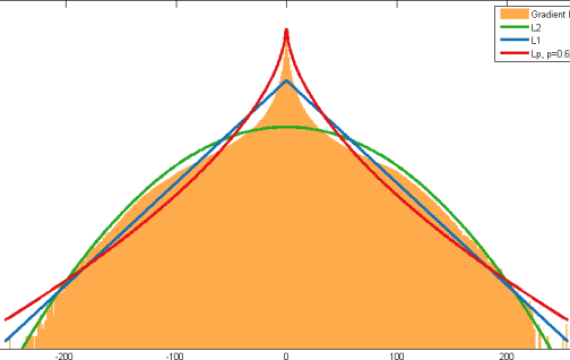
Blind deconvolution using alternating maximum a posteriori estimation with heavy-tailed priors
Blind deconvolution aims to estimate the blur PSF from a single blurred image and then deblur the
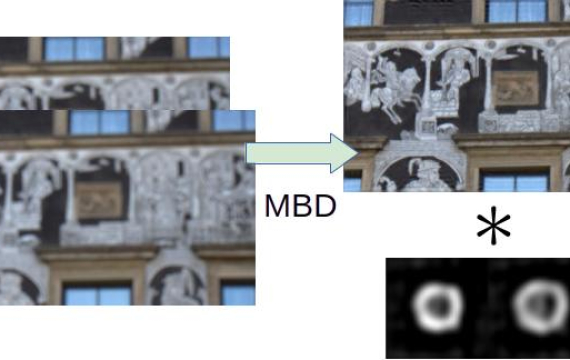
Algorithm for Fast Image Restoration
Blind deconvolution, which comprises simultaneous blur and image estimation, is a strongly ill-po
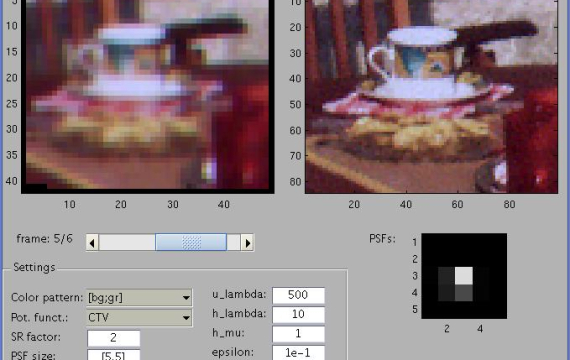
Super-resolution imaging (Matlab GUI)
Super-resolution (SR) is the process of combining a sequen
Restoration of images blurred by camera motion
The blur caused by camera motion is a serious problem in many areas of optical imaging such as re
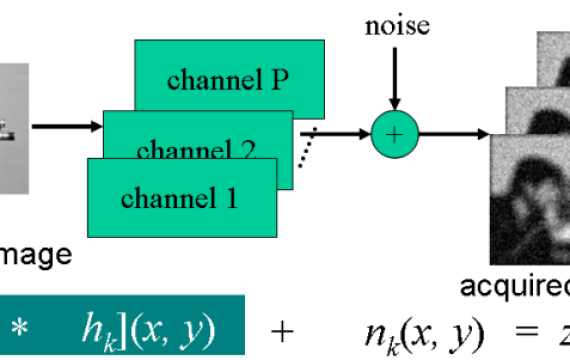
Multichannel Blind Deconvolution (Matlab GUI)
We assume a standard acquisition model. The original image undergoes